miércoles, 6 de marzo de 2013

THE GEOSPHERE (Unit 7-Science Y5)

We have been learning about THE ATMOSPHERE and THE HYDROSPHERE. Even though today it is time to learn about THE GEOSPHERE.


What is the geosphere?

The geosphere is made up of three layers.

GEOSPHERE LAYERS

Could you join the picture with the correct answer to these questions?

 Which is the outer layer of the geosphere?
Which is the inner layer?
Which layer is between the crust and the core?


ROCKS and MINERALS


Are rocks natural materials?
Are minerals natural materials?
What are rocks made of?

To get to know more than rocks, we are going to watch this webpage:


TYPES OF ROCKS

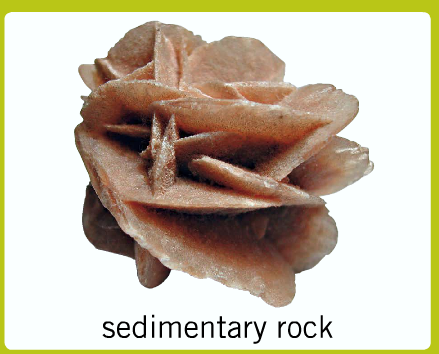
Rocks can be classified into three types depending on how they are formed:


To remember everything about the Geosphere, we are going to do these activities:

martes, 5 de marzo de 2013

EUROPE: PHYSICAL FEATURES (Unit 10-Science Y6)

Let's move onto a new topic in our Science lessons we are going to study Europe and its features: physical and political ones.

First of all we are going to look for PHYSICAL FEATURES, Secondly we will learn about CLIMATES, thirdly we will have a look to POPULATION AND DIVERSITY and we will finish with the EUROPEAN UNION.

Let's start with the PHYSICAL FEATURES OF EUROPE.

Have a look to this picture and try to answer the questions:

  • Where are the majority of mountain chains in Europe?
  • Which are the three longest rivers?
  • Which is the highest mountain?

This video may clarify some concepts about Geography of Europe with some photos and explanations.

Physical features of Europe.
  1. The Great European Plain:  From the Pyrenees to the Ural Mountains.
  2. Mountains: Most of them are in the South like the Alps or the Balkans.
  3. Compact groups of mountains: These are called plateaus, like the Central Plateau in Spain, or massifs, like the Central Massif in France.
  4. Peninsulas: (A piece of land which is almost completely sourrounded by water) like the Scandinavian or the Iberian.
  5. Islands: Like Iceland or the British Islands.

Coast and Rivers.

Europe has coastlines:
  • In the north with the Artic Ocean, the North Sea and the Baltic Sea.
  • In the south - east with the Caspian Sea.
  • In the south with the Mediterranean Sea and the Black Sea.
  • In the west with the Atlantic Ocean.
There are lots of rivers which cross Europe. The longest is Volga, which is 3.692 Km.

LET'S PLAY AND CHECK YOUR LEARNING. 

Activities

viernes, 1 de marzo de 2013

POPPLETS ABOUT VERTEBRATES

Tengo el placer de presentaros los post publicados por los alumnos de 5ºB en la asignatura de Science.

Estos posts han sido publicados en el blog de aula:

Los alumnos han utilizado la herramienta de la web 2.0 POPPLET para hacer sus propios diagramas o mapas conceptuales sobre la unidad 4 VERTEBRATES. 

Después han insertado esas imágenes en su propio blog construyendo así un post dedicado a resumir y entender mejor la unidad.

Aquí os dejo con cada post hecho por cada alumno.

    jueves, 28 de febrero de 2013

    POPPLETS ABOUT INVERTEBRATES (Unit 3-Science Y5B)

    Tengo el placer de presentaros los post publicados por los alumnos de 5ºB en la asignatura de Science.

    Estos posts han sido publicados en el blog de aula:

    Los alumnos han utilizado la herramienta de la web 2.0 POPPLET para hacer sus propios diagramas o mapas conceptuales sobre la unidad 3 INVERTEBRATES. 

    Después han insertado esas imágenes en su propio blog construyendo así un post dedicado a resumir y entender mejor la unidad.

    Aquí os dejo con cada post hecho por cada alumno.

      miércoles, 27 de febrero de 2013

      THE HYDROSPHERE (Unit 7- The Earth - Science Y5)

      In the topic of the Earth, also we are going to learn about THE HYDROSPHERE.


      What is the hydrosphere?


      The hydrosphere is all the water on Earth.

      I would like to know how and where I can find water. Can you tell me?


      WATER

      LIQUID (covers most of the Earth's surface) is found in oceans, seas, rivers and lakes.
      SOLID (snow and ice) is found in the polar regions and on mountains.
      GAS (water vapor) is found in the atmosphere.

      To get to know more about the hydrosphere, we will visit this webpage:

      THE WATER CYCLE

      Can you explain how the water cycle works? 

      To answer this question, first of all we are going to watch this webpage. We will watch a video and test yourself.


      Explain the picture which is below in pairs. (You can use the book page 28)


      THE MOVEMENT OF WATER


      Are you able to match the definition with the correct movement of water?


      • (...) are the rise and fall of the water's surface. They are caused by wind.
      • (...) are the rise and fall of the sea level twice a day. They are caused by the gravitational pull of the Moon and Sun.
      • (...) are the movements of large masses of ocean water in the same direction.

      To remember we are going to make these activities: