Mostrando entradas con la etiqueta the landscape. Mostrar todas las entradas

viernes, 4 de abril de 2014

EVALUATION ABOUT PARTNER'S THE LANDSCAPE VIDEOS (Unit 8-Science Y5)

With this post we will start with a new way of doing at the class, you are going to evaluate your partner's videos and mind maps following the rubric and answering to this form.


When you finish reading the rubric and you have everything clear about your mind, you can start watching your partner's video and answering the questions to evaluate it. 
IT IS VERY IMPORTANT TO HAVE CLEAR WHAT YOU HAVE TO LOOK FOR AND WHAT THE CRITERIAS FOR EVALUATION ARE.


You will send your evaluation through this Google Form. 
DON'T FORGET TO CLICK ON SUBMIT AT THE END.
To write the comments, you have to follow this pattern:
  • REDACCIÓN EN KIDBLOG: Tienes … puntos, porque…
  • ORGANIZACIÓN EN EL MIND MAP: Tienes … puntos, porque…
  • ESTRUCTURA DEL TEXTO: Tienes … puntos, porque…
  • ORTOGRAFÍA: Tienes … puntos, porque…
  • TÉCNICA GRAMATICAL Y TIEMPOS VERBALES: Tienes …puntos, porque…
  • VOZ Y RITMO: Tienes …puntos, porque…

jueves, 3 de abril de 2014

VIDEOS ABOUT THE LANDSCAPE (Unit 8 - Science Y5)

Tengo el placer de presentaros los post publicados por los alumnos de 5ºA en la asignatura de Science.


Estos posts han sido publicados en el blog de aula:


Los alumnos han utilizado la herramienta de la web 2.0 http://popplet.com/ para hacer sus propios diagramas o mapas conceptuales sobre la unidad 8 the landscape. 

Después han utilizado sus propios mapas conceptuales para construir un vídeo utilizando la web tool http://www.screencast-o-matic.com/. Ese vídeo es "upload" por ellos mismos a su propio canal de youtube para terminar con todo ello, en su propio blog, construyendo un post dedicado a resumir y entender mejor la unidad.

Más tarde lo han enviado a una asignación por EDMODO nuestra red social.

Aquí, os dejo con cada post hecho por cada alumno.


lunes, 24 de marzo de 2014

The coast (Unit 8 - Science Y5)

We have learnt about the landscape in general and about the mountains and plains in Spain. Now it's time to focus our attention in the coas landscape. We will introduce this topic with the following chant. (Let's sing if you want). 


THE COAST:

The coast is the place where the land meets the sea.

There are two types of coast:

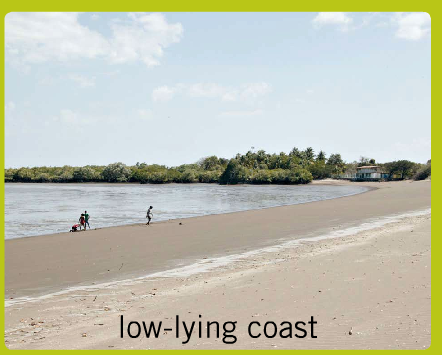
LOW-LYING COASTS: They are plains by the sea. They have sandy beaches. 

HIGH COASTS: They are high areas by the sea. They often have rocky cliffs.


LET'S THINK A MOMENT AND ANSWER THESE QUESTIONS:
  • Where can you see a high coast in Spain?
  • Where can you see a low-lying coast in Spain?


TYPES OF COASTLINES:


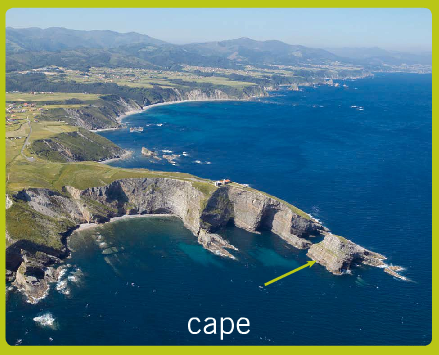
A CAPE: It is land which extends into the sea.

A GULF: It is a place where the sea extends into the land.


A PENINSULA: It is land which is almost completely surrounded by water.
AN ISLAND: It is land which is completely surrounded by water.

AN ARCHIPELAGO: It is a group of islands.

AN ESTUARY: It is a part of a river which opens into the sea.

A MARSH:  It is wet land near the mouth of a river. 


LET'S PLAY TO FIX YOUR KNOWLEDGE

viernes, 21 de marzo de 2014

MOUNTAINS and PLAINS in SPAIN (Unit 8-Science Y5)


We are going to start with a THINKING ROUTINE: THINK-PAIR-SHARE. 


  • THINK: During 1 minute you will think on your own about what you have learnt about Landscapes
  • PAIR: During 2 minutes you will talk with your partner about what you have thought. REMEMBER YOU HAVE TO TALK IN ENGLISH AND ALSO YOUR PARTNER, IF NOT YOU CAN SAY HIM OR HER. STOP! TALK TO ME IN ENGLISH.
  • SHARE: You will say to the whole class what you have thought or rememebered about the Landscapes. With your ideas the teacher will create a mind map in the blackboard. You can use this mind map to add all the new information you will learn today. 
In this video you will have a look about the highest mountains in Spain:
  • HAVE YOU EVER VISITED ANYONE OF THEM?
  • I HAVE VISITED...........................................

MOUNTAINS AND PLAINS IN SPAIN


  • Central Spain is dominated by a large plateau: CENTRAL PLATEAU. 
  • CENTRAL PLATEAU is divided into two parts by CENTRAL MOUNTAIN CHAIN.
  • THE PYRENEES is in the north it is the natural border with France.
  • THE BETIC CHAIN  is a chain in the south of the Central Plateau
  • Iberian Península has narrow coastal plains.
  • There are two depressions:
    • The Ebro Drepression in the north.
    • The Guadalquivir depression in the south. 

LET'S PLAY A BIT TO FIX ALL WHAT YOU HAVE LEARNT.


martes, 18 de marzo de 2014

THE LANDSCAPES (Unit 8-Science Y5)

We will start with a new topic THE LANDSCAPES. We are going to start thinking using a THINKING ROUTINE: The traffic lights. 

Let's draw a traffic lights in your notebook or in your Thinking notebook. 


And now during 3 minutes you will think about all the things you have already known about LANDSCAPES. And then classify it into the three colours:
  • GREEN: Write things you know and understand perfectly about LANDSCAPES.
  • YELLOW OR ORANGE: You know and understand something but you will need some help to go deeper on this things about LANDSCAPES.
  • RED: You don't understand or get these things or you want to know more about it during the time we are going to look for it in Science lessons. 

Once you have clear what you know, we are going to have a look to this video about LANDSCAPES. 

  • How many LANDFORMS does the video talk about?
  • What are these landforms?
  • Can you say me the definition at least of one of them?


THE LANDSCAPE

All the different features of the Earth's surface make up the landscape.


MOUNTAINS

MOUNTAINS are raised parts of the Earth's surface.

HILLS have lower altitude than mountains

Several mountains grouped together are called a MOUNTAIN RANGE. A long line of mountain ranges is called a  MOUNTAIN CHAIN

VALLEYS are low area between mountains. Rivers are often found in valleys.

PLAINS
They are large areas of flat lands with now hills or slopes.

A PLATEAU is a plain at a high altitude.

DEPRESSIONS are plains which are lower than the surrounding land.

COASTAL PLAINS are flat land near the coast. 

Let's practice all what you have learn during your Science lesson. Remember IT'S IMPORTANT TO PRACTICE TO FIX THE KNOWLEGDE IN YOUR MIND. 


miércoles, 17 de abril de 2013

EVALUATION ABOUT PARTNER'S THE LANDSCAPE VIDEOS (Unit 8-Science Y5)

With this post we will start with a new way of doing at the class, you are going to evaluate your partner's videos and popplets following the rubric and answering to this form.


When you finish reading the rubric and you have everything clear about your mind, you can start watching your partner's video and answering the questions to evaluate it. 
IT IS VERY IMPORTANT TO HAVE CLEAR WHAT YOU HAVE TO LOOK FOR AND WHAT THE CRITERIAS FOR EVALUATION ARE.


You will send your evaluation through this Google Form. 
DON'T FORGET TO CLICK ON SUBMIT AT THE END.

VIDEOS ABOUT THE LANDSCAPE (Science Y5)

Tengo el placer de presentaros los post publicados por los alumnos de 5ºB en la asignatura de Science.

Estos posts han sido publicados en el blog de aula:

Los alumnos han utilizado la herramienta de la web 2.0 POPPLET para hacer sus propios diagramas o mapas conceptuales sobre la unidad 8 THE LANDSCAPE. 

Después han utilizado sus propios mapas conceptuales para construir un vídeo utilizando la web tool http://www.screencast-o-matic.com/

Ese vídeo es "upload" por ellos mismos a su propio canal de youtube para terminar con todo ello, en su propio blog, construyendo un post dedicado a resumir y entender mejor la unidad.

Aquí os dejo con cada post hecho por cada alumno.

    jueves, 14 de marzo de 2013

    THE LANDSCAPE (Unit 8-Science Y5)

    It's time to get to know a new topic THE LANDSCAPE.

    First of all, we are going to watch beautiful landscapes.


    Look at the photo:

    Answer these questions. We are going to divide the class in four groups and each group is going to use a landscape:
    What can you see in these landscapes?
    Is everything natural, or are some things man-made?
    Are trees natural features?
    Are mountains natural features?
    Are houses or buildings man-made?
    Are roads man-made?

    THE LANDSCAPE
    It is all the different features of the Earth's surface.

    MOUNTAINS

    Mountains are raised parts of the Earth's surface.

    Hills have lower altitude than mountains.


     Altitude is the height of something above sea level, or the Earth's surface.

    Several mountains grouped together.
    A MOUNTAIN CHAIN is a long line of mountain range.

    Can you tell an example of mountain range and other of mountain chain?

    Valleys are low areas between mountains. 
    What are you often found in the valleys?

    Which has a higher altitude a hill or a mountain?

    Which has a higher altitude a hill or a valley?

    PLAINS
    Plains are large areas of flat land with no hills or slopes.


    A plateau is a plain at a high altitude.


    Depressions are plains which are lower than the surrounding land.
     Coastal plains are flat land near the coast.

    Then, thinking in pairs about an example near your village.
    Finally you can make these activities: