During the last two lessons we talked about THE ECONOMY and about the PRIMARY AND SECONDARY SECTOR IN SPAIN. Today we are going to look and go indeep into the SERVICE SECTOR OR TERTIARY SECTOR IN SPAIN.
We want you to have a look to this video. At the end of the video we want you to answer some questions about it.
Can you tell three good things about Spain which are good for Tourism?
What things does Spain improve to have more tourists?
THE SERVICE SECTOR.
We can classify all the activities of this sector depending on the final aim.
PRIVATE SECTOR: banks, insurance companies, entertaiment industry, restaurant or shops. They want ot make money.
PUBLIC SECTOR: hospital or schools want to provide a service frequently this service is offered by goverment.
TRANSPORT
All Spain is conectted by road, and lots of motor ways.
Major cities and town are also connected by railway.
Suburban trains connnect big cities with surrounded areas.
Big cities (Madrid, Barcelona, Valencia and Bilbao) have underground.
There are airports in many cities.
TOURISM.
Every year million of foreing tourist come to Spain.
Tourism is one of the most important service activities in Spain.
It provide work for many people and makes a lot of money.
LET'S PRACTICE WITH THIS CROSSWORD.
Once we have finished with all the topic it is time to create your mind maps. We will start creating them in groups and using one of our THINKING ROUTINES: GENERATE - SORT - CONNECT - ELABORATE.
In the last historical period we talked about the Visigoths. The Visigoths were in the Iberian Peninsula until the 711 A.D. when the King Roderic was defeated by the MUSLIMS. It was in this moment when this new historical period started.
LET'S HAVE A LOOK TO THIS VIDEO TO HAVE AN IDEA ABOUT HOW THE MUSLIM CONQUEST WAS.
How was the Muslim conquest?
You could look at the map which is below how the Muslims were in the Iberian Peninsula from 711 up to 1492.
THE MUSLIM INVASION.
Muslims from northern Africa invaded Visigothic Spain in 711 A.D.
They ocuppied most of the Peninsula and the Balearic Islands.
This territory was called Al Andalus, and its capital was Cordoba.
Al Andalus became a province of the Muslim Empire. It was governed by the caliph of Damascus in Asia.
THE EMIRATE OF CALIPHATE OF CORDOBA.
In 756 A.D. Abd ar-Rahman I established Al Andalus as an independent province or emirate.
In 929 A.D. Al Andalus became a caliphate under Abd ar-Rahman III. He was the caliph, the maximum political and religious authoroty in Al Andalus.
The caliphate lasted until 1031 A.D. During this period, Al Andalus was divided into smaller kingdoms, called taifas.
THE END OF AL ANDALUS.
The taifas fought among themselves and this helped the Christian Kingdoms to gain territory.
In 1212 A.D. The Christians defeated the Muslims at The Battle of Las Navas de Tolosa.
In 1492 A.D. the Catholic Monarchs conquered the only remaining Muslim Kingdom, the Kingdom of Granada.
SOCIETY AND CULTURAL HERITAGE.
Al Andalus society was formed by Muslims, Christians and Jews.
It had great scienctists, suchs as doctors, mathematicians and geographers. The mathematicians created the systems of numbers which we used today
During the last lesson we had a quick view about ECONOMY, talking about what all the sectors are and they main thing they work on. Today we are going to focus our attention on the Primary and Secondary Sector in our country Spain.
Let's watch this video about a man from Palencia. At the end of the video we want you to answer this video:
What are the best and the worst things for him as a crop farmer?
THE ACTIVE POPULATION.
Nowadays the active population in Spain is around 23 million of people. And because of the crisis 16,5 million are employed and around 6 million are unemployed people.
The active population is divided in:
4.4 % work in the primary sector.
20.6 % work in the secondary sector.
75 % work in the service sector.
THE PRIMARY SECTOR.
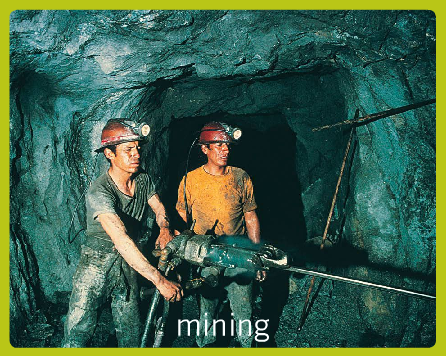
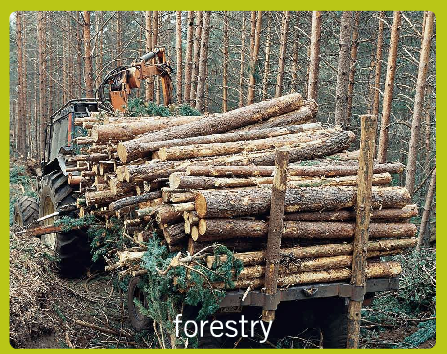
The main sector activities are agriculture, livestock farming and fishing.
Hoy, 5 de mayo de 2014, en tutoría haremos HARA. Se llamará SER POSITIVO y aquí podrás descubrir lo que harán los alumnos de 6º de Primaria del Colegio San Gregorio de Aguilar de Campoo en Palencia.
Pharrell Williams - Happy (Despicable Me 2 - Lyric Video)
Este texto ha sido adaptado por la tutora de 6ºA Sandra Calderón.